Inside the intensely competitive world of contemporary serious sliding, podium finishes is no longer exclusively a product of sheer horsepower or pilot aggression. Rather, it is now a complex discipline which necessitates a meticulous marriage of picking a proven vehicle platform, arming it with the highest-quality performance parts, and, most essentially, understanding its real-time performance on the course through advanced vehicle dynamics analysis tools. This definitive guide acts as your master plan starting from the very first concept of a drift build right through to the last engineering-refined refinements that transform a powerful car into a predictable podium finisher. We will examine in detail the art and science of car suspension tuning, illustrating how a state-of-the-art vehicle dynamics tool like precise measurement hardware eradicates approximation and offers exceptional insight into your car's actual behavior.
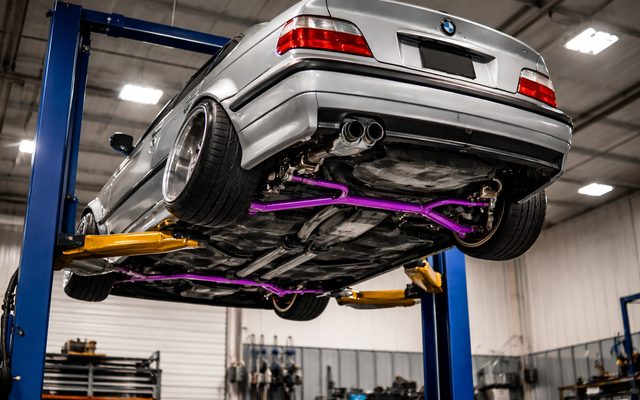
The cornerstone of any exceptional drift machine is, undoubtedly, the platform itself. A select group of cars have earned iconic reputation within the global drifting community due to their inherent balance, durable design, and the enormous availability of performance parts available. Choosing the right platform is the first and most important decision a builder will make. To illustrate, the the E36 generation BMW is commonly accepted as among the finest all-around drift cars of the modern era. Its excellent balanced front-to-rear weight, combined with a rear-wheel-drive layout and robust straight-six engines, creates a car that is simultaneously forgiving for beginners and incredibly competitive in the hands of a expert pilot. The successor of this lineage, the BMW E46 platform, refines these attributes with a more developed structure, wider wheel track for enhanced confidence, and still more turning capability directly from the factory. A distinct powerful option in the pro arena is the Corvette C6.
This V8-powered track weapon introduces a unique array of advantages to the sideways world, including a light aluminum structure, a transaxle-style drivetrain component that aids in an perfect balance, and the colossal low-end power of a powerful LS V8 motor. This fusion makes it an complete weapon on track, able of initiating and holding continuous drifts with relatively effortless use of acceleration. For those looking for exceptional bang-for-the-buck, the Nissan 350Z rises above as a excellent example. It comes from the manufacturer with a stiff body structure, a decent factory LSD, and the responsive VQ35DE powerplant that offers plenty of power and torque for mastering and moving up in the sport. Its newer version, the 370Z model, brings further improvements in structural rigidity, handling precision, and outright motor power, cementing its status as a favorite selection among competitive pilots. Further legendary platforms that merit attention include the lightweight Wankel-engined Mazda FC, the most popular Nissan S13 240SX, the V8-powered SN95 generation Mustang, the electronic-equipped BMW E90, and the compact yet incredibly fun and teachable Mazda Miata. Every single one of these cars offers a distinct palette of characteristics, difficulties, and capabilities, but they all have in common the basic components essential to serve as a competitive drift car.
However, selecting the right platform is merely the beginning. To unlock the true potential of every of these machines, major changes to the steering geometry and chassis control systems are utterly essential. This is where the realm of specialist tuning hardware enters critical view. The single most transformative upgrade for a purpose-built competition vehicle is the integration of a maximum-angle steering angle kit. These advanced kits, such as those manufactured by performance brands like SLR Speed, are engineered to radically expand the chassis's available steering angle. A standard road car is extremely limited in how far its front wheels can pivot, a engineering trade-off for public road use. In oversteer driving, but, extreme steering input is frequently necessary to catch and sustain a drift. An angle kit exchanges the OEM steering knuckles, linkages, and often control arms with parts that allow the steered wheels to reach angles over 70 or even 80 degs, compared to a average factory angle of around 40 to 50 degrees.
This tremendously expanded lock provides the operator with exponentially enhanced command during a angle, allowing it to be far more straightforward to initiate a oversteer moment, sustain it through a sweeping corner, and change seamlessly from one side to the other. The difference in controllability is nothing short of transformative. Combined with a correctly specified steering kit is the equally essential upgrade to the car's spring and damper setup. Off-the-shelf or including high-end road coilovers are just not intended for the unique and harsh demands of competitive oversteer. A purpose-built system of coilovers is crucial. These engineered dampers have custom damping rates and spring strength that are designed for the violent load shifting that is inherent of aggressive driving. When a operator starts a slide, the chassis's mass is transferred rapidly to the outer of the turn. Optimal drift-spec suspension manage this movement in a consistent fashion, permitting the chassis to settle rapidly and providing the driver accurate feel through the controls and driver's seat. They also enable precise tuning of stance, rebound and compression stiffness, and cross-weight, which are all fundamental elements of fine-tuning the chassis's handling to a particular venue or competition approach. As a system, a high-quality drift angle kit and a properly specified set of drift-spec adjustable dampers constitute the undeniable physical base upon which all later optimization is constructed.
Once the core hardware is installed, the next critical phase in the build is the meticulous setting of the vehicle's alignment. This is the realm of car suspension tuning, a process that can seem daunting to the beginner but is, in practice, the defining factor to converting a assembly of fast parts into a harmonious and controllable machine. The most debated element of alignment for drifting is definitely negative camber. Camber angle is the angle of the wheel compared to the perfectly straight plane when observed from the front of the chassis. If the upper part of the wheel is tilted towards the chassis, this is referred to as camber-in. For oversteer driving, inward-leaning wheels on the front axle wheels is widely used and is considered essential. The logic is intrinsically related to tire contact.
When a car is cornering at limit slip angles, the body tilts towards the outside of the corner. This body roll forces the outer front tire to diminish its ideal grip area with the track surface. By introducing inward lean, the wheel is pre-tilted to account for this lean. As the car rolls into the corner, the outside front tire becomes more upright with the track, maximizing its traction at the precise point when it is needed most for directional command. Typically, front axle camber settings for a competition drift car fall between approximately -3 degrees to as much as -5 degrees or even beyond, depending on the parameters of the chassis configuration, tire selection, and operator style. The back wheels also use negative camber, but the values are generally more modest and subtler than the front. Overly aggressive negative camber at the back can make the car excessively prone to oversteer and difficult to manage on acceleration application, as it diminishes the usable contact patch of the powered tires during straight-line power delivery. Hence, rear angles are frequently in the vicinity of -1 degree to -3 degrees, striking a careful equilibrium between providing enough side traction to help in initiating and maintaining the angle while still maintaining usable traction for power-down the turn. alignment is merely one element of the larger suspension geometry puzzle, which furthermore includes toe, caster angle, and suspension-induced steering modification.
Toe setting refers to the angle of the wheels as seen from the top. Positive toe means the leading edges of the tires are nearer together than the rear edges, while toe-out means the opposite. For sliding, a slight amount of front toe out is frequently run to improve the initial response steering reaction, making the chassis feel more responsive and ready to initiate a slide. Rear toe is typically set to zero or a very slight amount of toe-in to promote stability under acceleration. self-centering is the longitudinal or aft inclination of the suspension pivot when observed from the lateral of the chassis. Increased positive caster improves feedback and high-velocity stability, and it also increases negative camber effect during steering, which is very advantageous. Tuning these settings is a intricate interplay where a change to a single value can and often will impact the others. The traditional process for setting a vehicle's alignment for drifting has historically been a labor-intensive affair of guesswork and adjustment. A driver or team would introduce a adjustment based on experience, run the chassis on track, use the driver's individual perception and comments, and then make an additional change. This cycle would iterate time after time until the vehicle felt "good" or the scheduled testing session was exhausted. This approach is not only incredibly wasteful in terms of hours and tires, fuel, and parts, but it is also deeply inaccurate.
Pilot perception is a notoriously subjective metric, influenced by numerous factors such as exhaustion, changing track grip levels, ambient heat, and simply the mindset of the driver suspension engineering on that specific day. What feels "tail-happy" on one lap might feel "pushing" on the next pass, leading to contradictory information and counterproductive changes. This traditional problem in chassis setup is specifically where modern telemetry systems has stepped in to completely change the process.
The rise and application of sophisticated suspension tuning applications has brought about a radically different era for engineering and optimizing high-performance sliding vehicles. These tools, showcased by innovative solutions like data acquisition tools, function by physically recording the real-time mechanical performance of the vehicle as it is operated on the course. Unlike depending on personal feedback, these tools collect quantifiable metrics on key variables such as suspension travel, individual tire rotation, acceleration forces, steering angle, and accelerator and brake pedal position. This acquired telemetry is then processed by advanced algorithms that can plot and decode the metrics in a clear manner. For the very first time, engineers and builders can visualize specifically what the car is doing at every millisecond of a slide. This ability changes the whole chassis setup workflow. Imagine the aforementioned goal of dialing in the front camber for a particular car. Instead of making a change from -3 degrees to -3.5 degrees and then driving multiple runs to try and "sense" a change, a vehicle dynamics tool can deliver instant and irrefutable feedback. The software can show graphically how the suspension's loading is acting during the key moments of a slide: turn-in, sustain, and transition. It can demonstrate if the current value is permitting the loaded tire to keep maximum contact or if the tire is working inefficiently on its external shoulder.
The tool can then make fact-based advice for change. Perhaps the data shows that the outside front tire is even stressing its outer shoulder at -3.5 degrees of negative camber, implying that a move towards inward lean, say -4 degrees, might be beneficial. Conversely, the information might indicate that the tire is failing to reaching temperature or that the inside edge is wearing excessively, which could point to that there is excessive negative camber and a modest decrease back to -3.2 degrees would be more efficient. This degree of precision and practical intelligence was simply impossible in the days of pure manual tuning.
The benefit of using a comprehensive car alignment tuning drift telemetry system goes far beyond just optimizing alignment. It becomes an essential suspension tuning guide that is tailored to your specific car. When setting the damping values on your coilovers, rather than relying on imprecise advice or mimicking another driver's settings, you can employ the data to analyze how the car is performing in response to your tweaks. The software can display the suspension travel path over a section of track, revealing if the coilovers are controlling the body movement effectively or if they are permitting the vehicle to bounce too much after a transition. It can assist in pinpointing issues like hitting the bump stops or excessive extension, enabling you to apply data-backed decisions to preload settings, rebound/compression rates, or ground clearance. This approach applies similarly to the detailed task of suspension geometry optimization. In addition to camber, the system can give analysis into how changes to toe and caster are influencing the chassis's stability during various phases of a lap. For instance, it can help you to determine the ideal amount of front axle negative toe for your specific steering configuration and piloting approach by showing the response time of initial response and the consistency of the car at maximum countersteer. This transforms the software an incredibly powerful vehicle dynamics manual that is actively calibrated by the live dynamics of your specific car on the track. It vehicle dynamics tool moves the entire process from a mysterious craft into a methodical development procedure.
Additionally, the application of a tool like data acquisition is in no way confined to professional engineers with extensive funding. For the club-level enthusiast, it serves as an amazing equalizer. It practically gives the driver with the insight of a professional race engineer without the associated overhead. It drastically shortens the tuning process by giving unambiguous solutions to questions that would otherwise take countless track days of experimentation to solve. A builder can understand how their specific chassis behaves to specific adjustments, building a deeper knowledge of suspension theory in the endeavor. It also democratizes high-level suspension engineering techniques, permitting all drivers with the desire to optimize their machine to achieve it in a structured and successful way. This is especially important in a activity like sliding, where tuning knowledge has in the past been a tightly held commodity among professional drivers. Now, that power can be in the garage of any serious enthusiast.
In the final analysis, the path to building and optimizing the perfect competitive drift machine is a multi-stage mission that perfectly combines time-honored mechanical wisdom with cutting-edge data technology. It starts with the strategic pick of a proven car, then enhanced by the application of essential competition hardware like drift-spec steering angle kits and expertly specified performance coilovers. The build then advances into the intricate realm of alignment optimization, where values like camber angle, toe setting, and caster are carefully configured to match the car's upgraded capabilities and the pilot's personal technique. The final step, and what truly distinguishes the today's approach from the old ways, is the adoption of a powerful vehicle dynamics tool. This system eradicates the guesswork and waste of only subjective setup by delivering empirical, real-time telemetry on how the car is really performing. It serves as an unparalleled suspension tuning tool, a actionable coilover setup manual, and a comprehensive chassis development system. In unison, this integrated philosophy ensures that each and every element of the drift machine—from the pick of the chassis to the final click on the coilover—is refined for ultimate success on the track. It represents the full evolution of the discipline of oversteer driving, bridging raw driving skill with surgical chassis dynamics to build the perfect dominant vehicles attainable.